How to Care for and Sharpen an Axe
A good axe will outlast you if you look after it. The care is simple, and most of it takes a few minutes after you use it. These steps follow the advice Brant & Cochran give for their own axes, the makers of the Allagash Cruiser and the Dirigo Belt Axe. They apply to any carbon-steel axe with a wood handle.
The short version
- Wipe it clean and dry after every use.
- Touch up the edge with a honing puck. Use a file only when the edge is chipped or very dull.
- Keep a thin coat of oil on the steel.
- Oil the handle about once a month.
- Store it dry, in its sheath, away from heat.
Clean it after each use
Wipe off dirt, sap and moisture with a damp cloth. A little mild soap handles the stubborn spots. Skip harsh chemicals and anything abrasive. Then dry it all the way. Carbon steel rusts if it's put away wet.
How to sharpen an axe
A sharp axe is a safe axe. A dull one works harder and can glance off the wood.
- Hold it still. Clamp the head in a vise if you have one.
- File only if you need to. A flat mill bastard file takes out nicks and brings back a very dull edge. If the edge is in decent shape, skip this step.
- Hone with the coarse side of a puck. Keep the same angle on every stroke, work along the whole edge, then do the other side.
- Finish with the fine side. Same motion, lighter pressure.
- Strop it on leather if you want a finer edge.
An axe edge isn't one flat wedge. Brant & Cochran describe most axes as about 30 to 40 degrees right at the bit, thinning to about 15 to 20 degrees half an inch back. Follow the shape that's already there and don't try to regrind it.
Never sharpen an axe on a bench grinder. The heat can ruin the temper of the steel.
Brant & Cochran have a sharpening video and more detail on their axe care page.
Oil the steel
Put a few drops of oil on a clean cloth and rub a thin coat over the head. Wipe off the extra. Brant & Cochran recommend camellia oil, or a paste of camellia oil and beeswax. Like any carbon steel, the head will darken with use. That's normal.
Look after the handle
Check the handle for cracks and splinters, and make sure the head is still tight. Sand out small splinters. About once a month, rub in raw linseed oil or a wood conditioner, let it soak in, and wipe off what's left.
Store it right
Keep the axe somewhere cool and dry, in its sheath. Don't leave it on a damp floor, and don't hang it by the fireplace or wood stove. Heat dries the wood, and a dried-out handle works loose in the head.
What you need
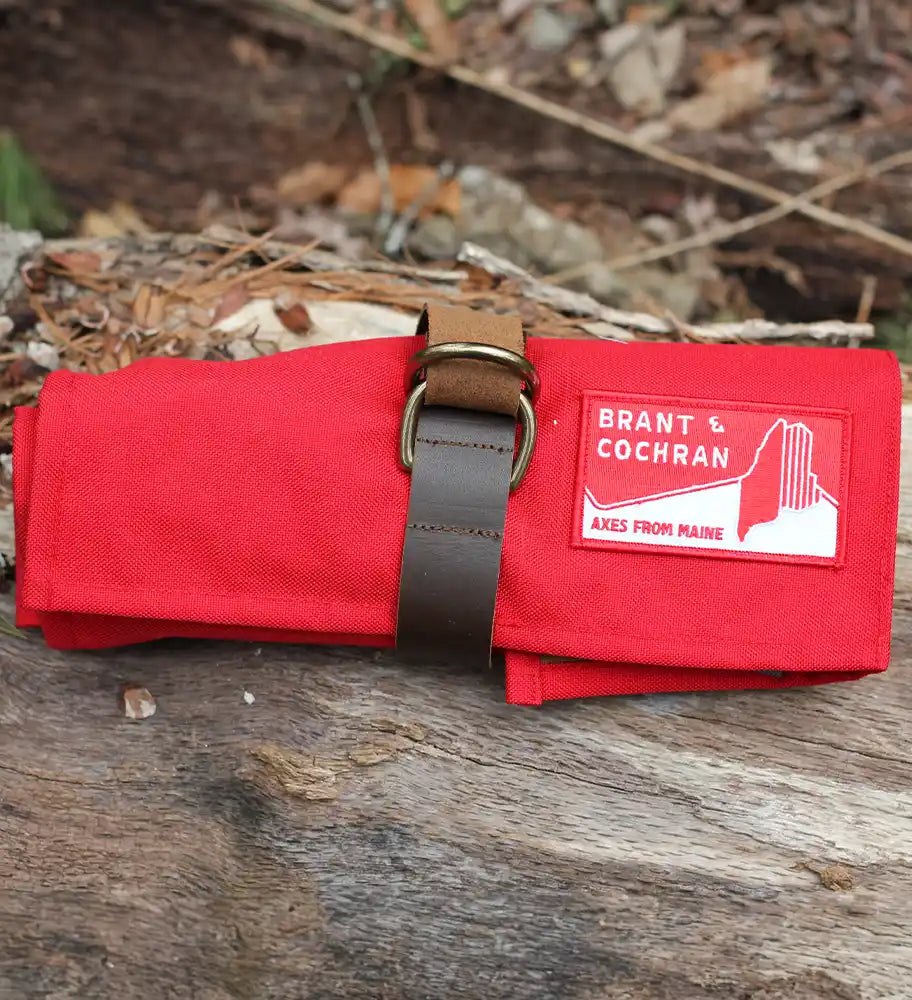
A file, a two-sided honing puck, oil for the steel and wax for the handle. Brant & Cochran put all four in one tool roll, the Field Kit, which is the kit they recommend for their own axes.
If you carry a knife too, see How to Sharpen a Scandi Grind Knife.